IPFS stands for Interplanetary File System. As cosmic as that name sounds, it is basically a file-sharing system that can be leveraged to more efficiently store and share large files. If you are familiar with open source contributions and technologies like Git or Github, then IPFS is quite like Git as it allows you to store files and track edits over a network. However, it is not exactly a blockchain.
How does IPFS work?
IPFS can be rightly called as the Hard drive for blockchain. It is a storage system that facilitates direct interaction via a secure and global peer-to-peer network. Thus, it enables something like a new web.
It was introduced in 2016, and allows users to share files and information without barriers. The most unique thing is, that unlike many technologies the IPFS system works best with large files that need a higher bandwidth.
Another reason for its popularity is because it is designed to operate over a multitude of protocols like FTP and HTTPS. It stores data using a distributed hash table, once the hash is obtained, we ask the peer network for the user who has the content located in that hash, and we download directly from the node that has the required data.
This mechanism increases security and creates a good control system. In this system, only those with the hash can access the content.
Why IPFS?
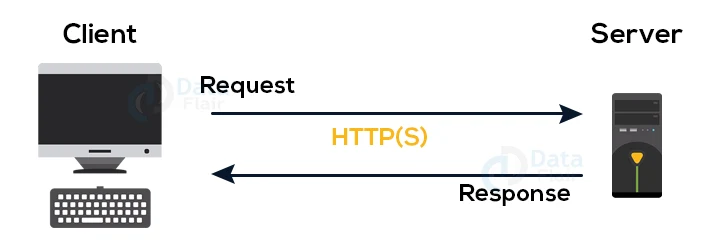
The existing internet is built on a number of protocols to manage data transfer over the network. All existing applications are built using these protocols. HTTP (HyperText Transfer Protocol) invented in 1991 is quite like the backbone of the existing web. It’s job is to transfer requests from a user to a website.
However, HTTP ceases to work when it comes to broken links (links that are unable to connect to the concerned websites because the content has been deleted, or blocked, etc), Moreover, HTTP works in a way that a lot of our way is handed over to the websites we visit giving them a lot of power and information which might be misused against us.
Hence, IPFS stands as a revolutionary alternative that seeks to make a permanent and decentralised web instead of the centralised one.
Leave a Reply